
Skimo is Going Back to the Olympics. The Individual Race Changes Everything.
Ski Mountaineering
2030 Olympics
Mountain Athlete
February. Bormio, Italy. A blizzard. I was standing at a start gate about to race the first Olympic ski mountaineering sprint in history, wearing a race suit in weather that made the whole thing feel slightly unhinged. I’d started this sport by learning transitions from YouTube videos in a car park, on grass and Nordic tracks in Idaho. Nobody in Australia had done this before me. There was no handbook.

Bormio, Italy. February 2026. The first Olympic ski mountaineering sprint in history.
The individual event wasn’t on the 2026 program. It had been left off to keep the quota numbers manageable for the organisers. A lot of athletes felt that absence. It’s the race that looks most like the sport in its actual form: steep long climbs, technical descents, transitions, changes in the race. More reflective of a trail race than the sprint. My engine was built for longer efforts. The individual is the event I most wanted to race, and I have my sights firmly on 2030 for it.
This week, the French Alps 2030 organising committee proposed adding it. Individual women’s and men’s races, alongside the sprint and relay that already ran in February. The IOC Executive Board reviews the proposal shortly. Vote is June 24-25.
Four years. Just over three, really. Let’s talk about what that means if you’re an Australian who has been watching this sport and wondering where you sit in relation to it.
What the individual race is, and why it’s different
The sprint is three to four minutes, total redline, very compressed, very technical. Spectacular to watch, genuinely brutal to race. The individual is a completely different beast. Think vertical kilometre, or a long mountain running race with skis. Multiple ascents, sustained climbing, technical descents, and still speedy transitions. The kind of effort that rewards years of mountain training rather than pure explosive speed.
Trail runners and backcountry skiers: this is the event that will make the most sense to you instinctively. The aerobic engine, the uphill power, the technical movement on steep terrain, reading lines under fatigue. That’s what it rewards. You have to love refining very specific skills on a very specific setup. It’s a niche within a niche, and that’s precisely what makes it interesting.
I competed in the sprint and the mixed relay at Milano Cortina. The relay was one of my favourite race experiences of my life, genuinely. The individual race wasn’t available to us at those Games. The 2030 Games are the first chance for that to change, and that window matters for Australian athletes in ways I don’t think have fully landed yet.
Why Australians specifically should care
An Australian skimo development pathway is now forming. When I built my way to qualifying for the Olympics, this structure wasn’t really there in any meaningful way. My skimo coaching came from YouTube, on-and-off support when I could afford it, a second-hand pair of K2 skis, a bike helmet I used in my first few races, and my running coach Gary Howard’s endurance programming. Gary has coached me since I was seventeen. He is excellent at what he does. He had never coached skimo. Gabin Ageron helped me in the final months leading into the Winter Olympics, with some minor federation funding. The sport was still very much finding its feet.
My way of learning was inefficient. Expensive in the way that learning things in race environments rather than training always is. I turned up to World Cup courses in Europe and figured out on the course, in the race, how transitions actually work at speed. How to read a bootpack. How to structure a skimo block without destroying the trail running season. These things are not complicated to learn. They are very slow to figure out alone. That said, trial by fire teaches you things no amount of theory can. I genuinely don’t regret the path. I just know there’s a better version of it available now.
I placed 18th in the Olympic sprint and 12th in the mixed relay. I had ankylosing spondylitis. I was working a remote job between races to cover rent. I was navigating foreign healthcare systems and visa paperwork in French and Italian, simultaneously preparing for the most significant competition of my life. I got there. The point is not that it was impressive. The point is it didn’t need to be that hard, and for the next Australian coming into this sport, it doesn’t have to be.
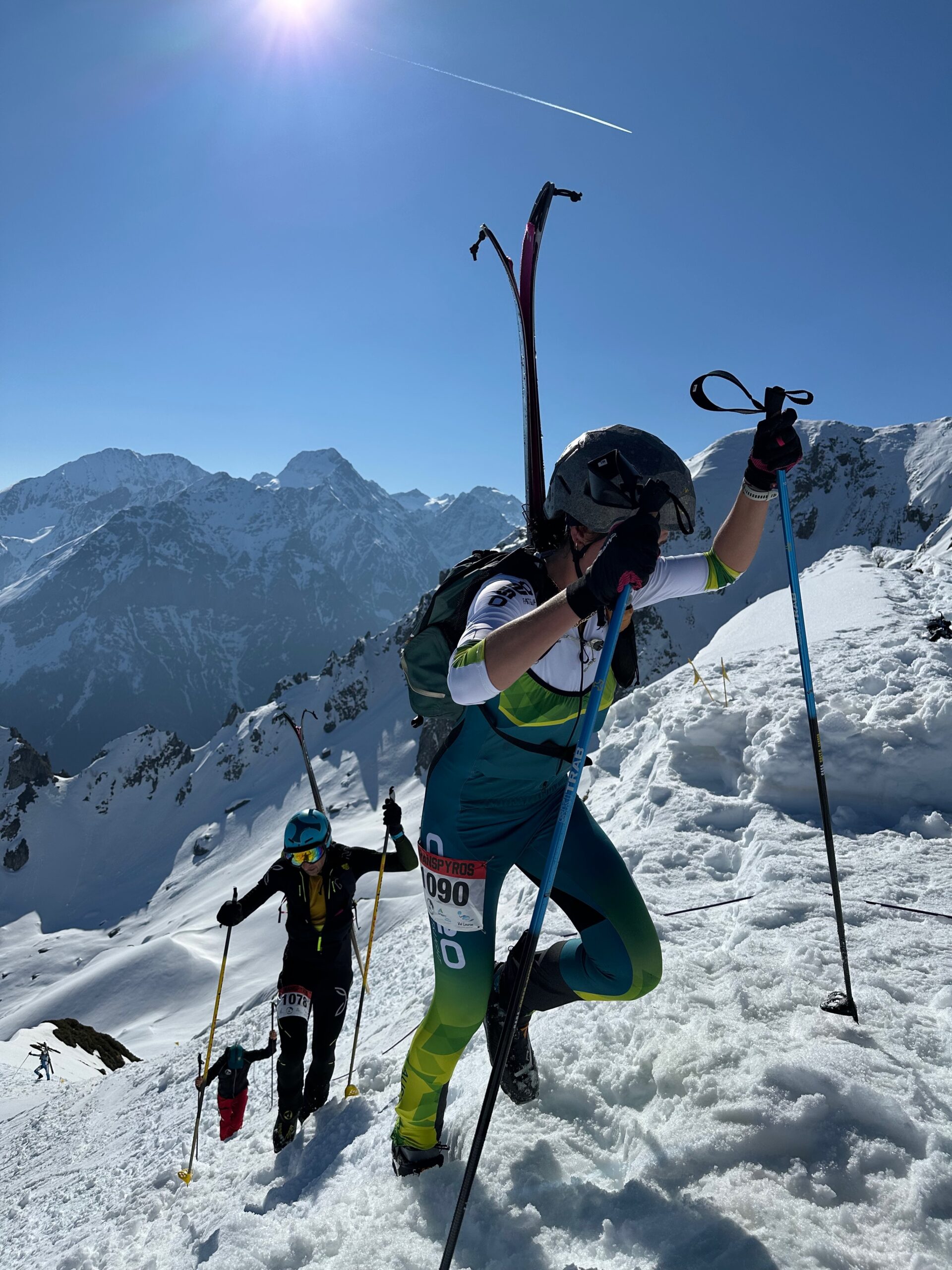
Racing in the Pyrenees, France. One of Europe’s top altitude training bases.
Just over three years. What to do with them.
If the vote passes on June 24, there is a concrete window to prepare for skimo at its highest level. Three years and a bit sounds short. For someone coming from a trail running or backcountry background with real mountain fitness already in place, it is genuinely workable with the right support.
Trail runners are already carrying most of what this sport requires. The engine, the uphill power, the technical movement on steep ground. That transfers directly. What builds on top is the technical layer specific to skimo: skinning, transitions, bootpacking, descending on race skis. These are learnable skills. Not fast from YouTube alone, but genuinely acquirable with someone who has actually done it.
Backcountry skiers in the Snowy Mountains, Victoria, or anywhere you regularly skin uphill: the movement patterns are already there. The gear familiarity is real. The main adjustment is intensity. Race skimo operates at effort levels most touring days never touch. That’s a fitness adaptation, not a technical hurdle. Your mountain sense and uphill mechanics are already doing real work.
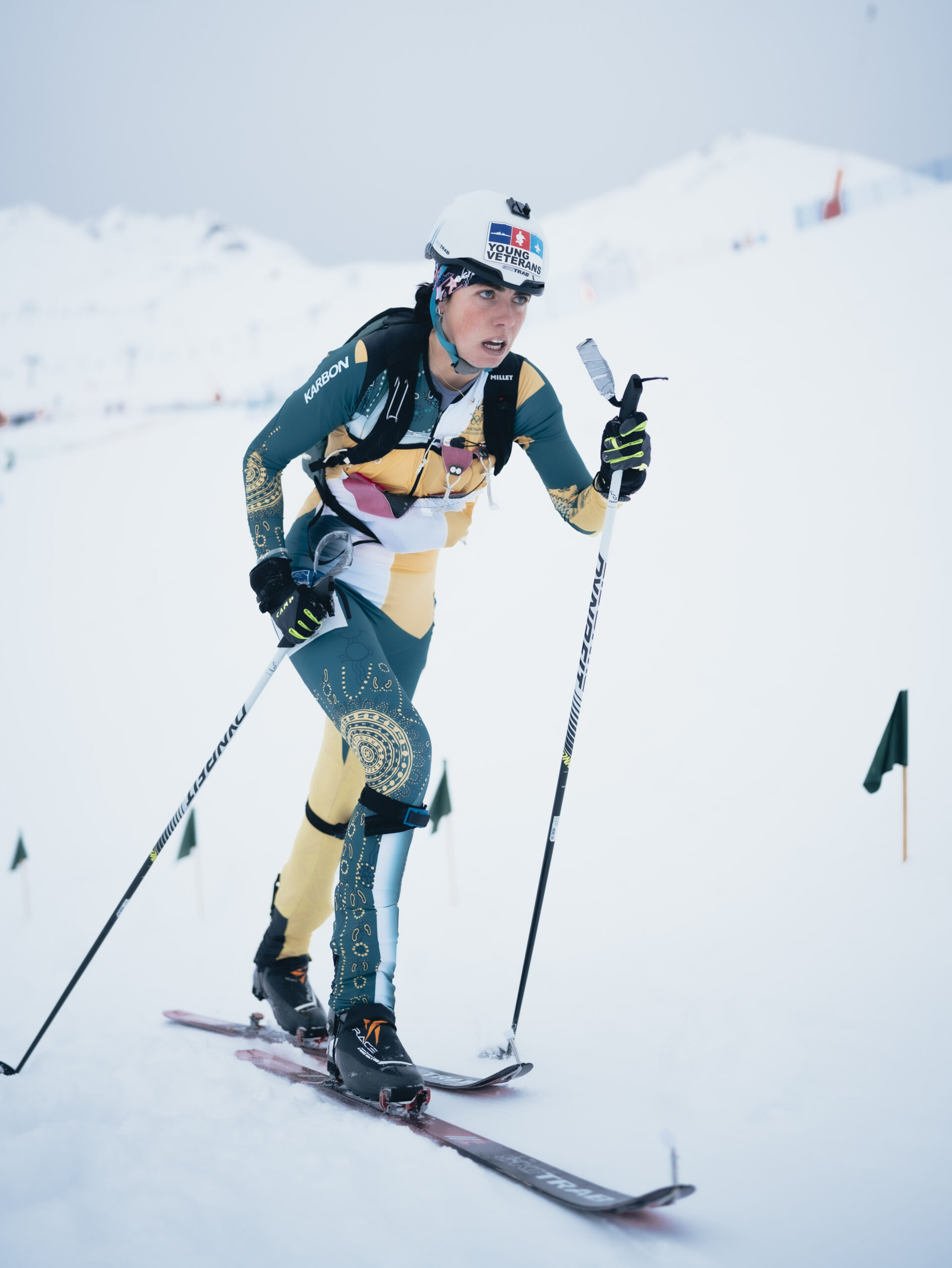
Skinning uphill during a World Cup skimo race. The individual event is where this kind of effort really lives.
Skimo coaching in Australia
There is very little. That’s the honest answer.
What I offer through my coaching work is not a national program. It’s direct access to someone who raced skimo at World Cup and Olympic level having learned it almost entirely without institutional support, and who therefore understands exactly what Australian athletes face trying to build in a discipline with almost no domestic infrastructure. I know what transfers from a trail running background immediately and what needs specific attention. I know how to structure a year that holds both a trail running season and a skimo season without one wrecking the other. I’ve done it under real financial pressure, managing a chronic illness, without a dedicated coach in the discipline I was competing in at the highest level. I’ve made the expensive mistakes. That experience is worth something when you’re trying to build a shorter path.
The chronic illness side is worth saying plainly too. Ankylosing spondylitis is an inflammatory condition affecting the spine. Managing it through a training year, across disciplines, in a foreign country, is not something most coaches have a framework for. I do. If you have AS, RA, or another autoimmune condition and sport feels like a constant negotiation, that’s a conversation I know how to have. I competed at the Olympics from it.
Who this is actually for
You watched the skimo events in February and thought that looks like something I’d actually enjoy. Trail running background, mountain fitness, curious about what a proper winter training block could look like. The individual event is built for people who love sustained mountain effort, and getting into the sport now while it’s still relatively new in Australia is a real opportunity.
You’re already skinning uphill on weekends in the Snowies or Victoria and you’ve clocked that race skimo exists but seemed complicated to access. The entry gap is mostly intensity and learning a handful of specific technical skills. The rest of it, you’re already doing.
You’re earlier in your athletic life, you ski and run, and you want to know what the pathway actually looks like. The sport is growing fast in Australia. Getting in early matters.
What’s next
The IOC vote is June 24-25. If the individual event gets approved, the 2030 French Alps Games will be the first to run the full skimo Olympic program: sprint, individual, mixed relay. Whether Australia shows up in that field in a meaningful way depends on whether athletes start building now and whether there is real support available to help them do it properly.
I became Australia’s first female Olympic ski mountaineer by figuring it out without a roadmap. I’m building the coaching side of this now specifically so that people who want to get into skimo in Australia have a clearer, better-supported path than the one I had.
If the sport has your attention, get in touch here. We can have an honest conversation about where you are and what makes sense from there.
The uphill is always worth it.
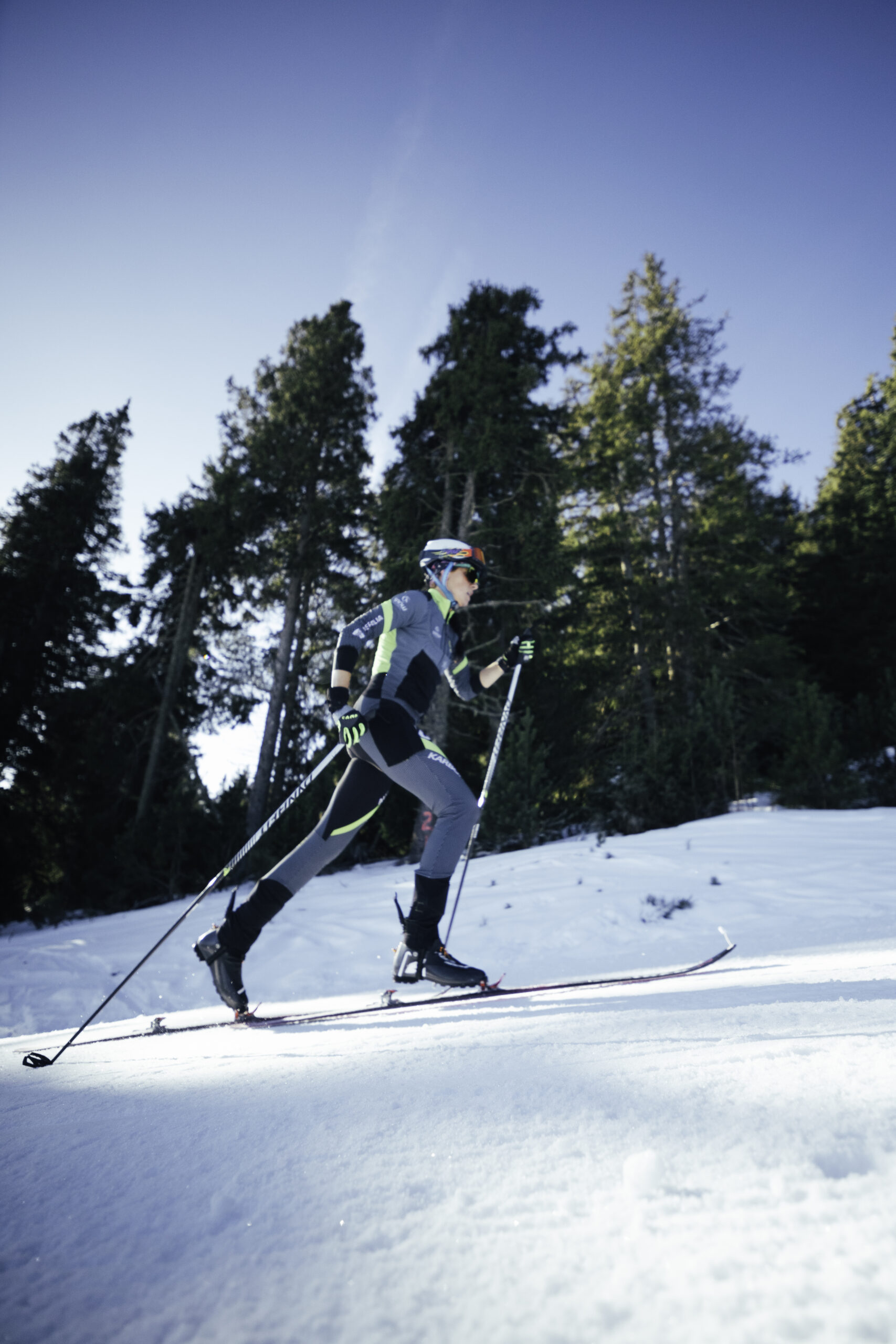
Milano Cortina 2026. Australia’s first female Olympic ski mountaineer.
First Australian woman to compete in ski mountaineering at the Winter Olympics, Milano Cortina 2026. Elite trail runner, mountain runner, and skimo athlete. Based in Font-Romeu, French Pyrenees. Coaches athletes getting into skimo, trail running, and navigating both, including those managing chronic illness. larahamilton.com/coaching


