

From Trail Runner to Olympian
By Lara Hamilton, Australian Olympian, trail runner, and one of Australia’s first Skimo coaches
From Trail Runner to Olympian: What Ski Mountaineering Taught Me About Training as a Mountain Athlete
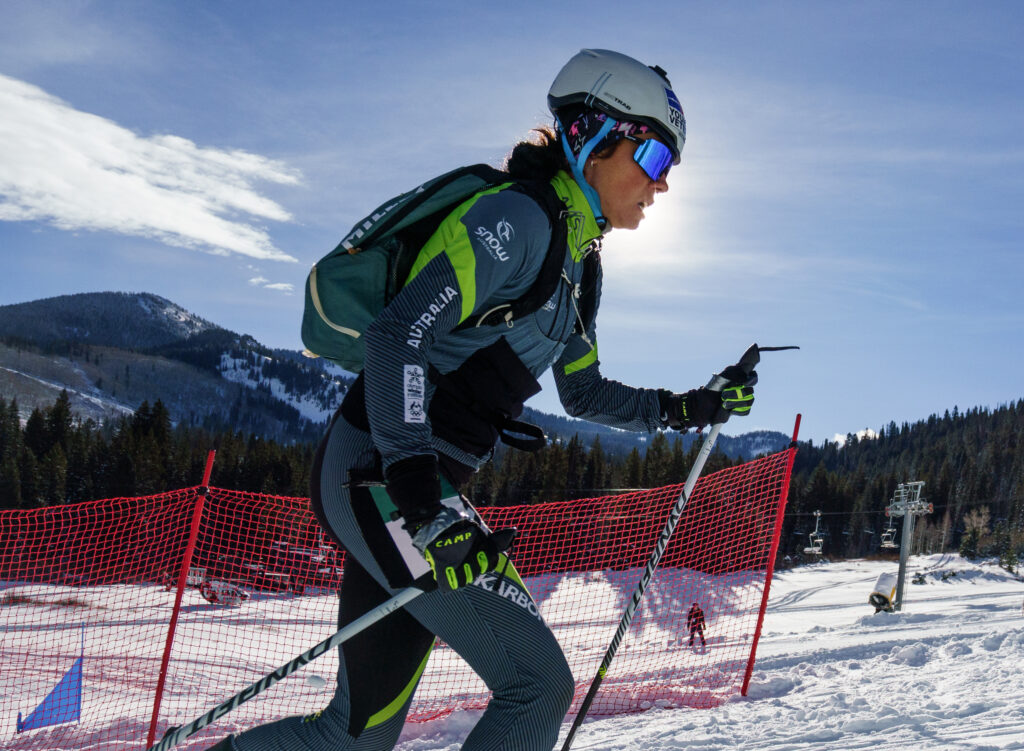
Most xtrail runners I know have a moment where the mountains stop being a backdrop and start being the whole point. The finish line stops mattering as much as what you discovered on the way to it. If you’re a trail runner who watched ski mountaineering make its Olympic debut at Milano Cortina 2026 and thought that looks like something I could do, I want to talk to you directly. You might be more right than you think.
I’m Lara Hamilton. Australian trail runner, ski mountaineer, and the first Australian woman to compete in skimo at the Winter Olympics. I’ve also been called Australia’s first true skimo coach, which still feels strange to say out loud. What I want to share here isn’t a highlight reel. It’s the story of how ten years of chasing mountains across two sports taught me what it actually means to train as a mountain athlete, and why that distinction matters more than most people realise.
The sport nobody warned me about: Ski-Mountaineering, better known as Skimo
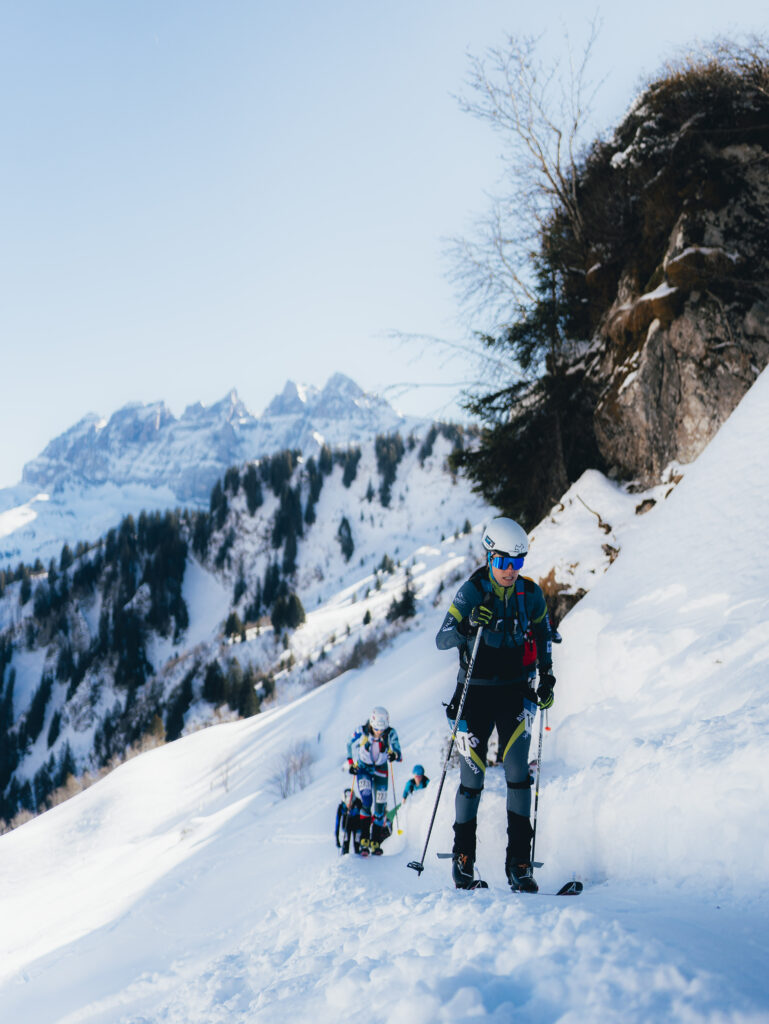
I didn’t come to ski mountaineering through a conventional pathway. In Australia, there isn’t one. I grew up Nordic skiing with my family, driving six hours each way on weekends to reach the snow. I became the Australian U20 cross country running champion in 2017, earned a Division I scholarship to Boise State University in the US where I begun my Masters in Opera in 2019, competed in World Championships in trail running, and somewhere in the middle of all of that, I picked up a second-hand pair of K2 skis, a bike helmet, and watched YouTube tutorials on how to do skimo transitions.
That last part is not a metaphor. That is genuinely how I learned.
There was no national program to plug into, no coach, no squad. Just a sport I was falling in love with, mountains that made me feel something I couldn’t explain, and a diagnosis of Ankylosing Spondylitis, an inflammatory autoimmune condition affecting the spine, that had already forced me to completely reimagine my relationship with my body and with sport. Skimo, for reasons I didn’t fully understand at first, agreed with me. The uphill motion, the self-sufficiency, the way it demanded everything I had and then let me move back down in silence. It felt like the most honest sport I’d ever done.
By the time I qualified for the 2026 Winter Olympics, I had been almost entirely self-coached in skimo. I used my own running background, my coach Gary Howard’s endurance programming, and an enormous amount of trial and error across World Cup courses in Europe. I placed 18th in the sprint and 12th in the mixed relay, starting from YouTube videos on a phone screen in Idaho and then Colorado.
I’m sharing this not to be impressive, rather because it’s directly relevant to you as a trail runner considering skimo, and to what I now understand about coaching mountain athletes.
Why trail runners are built for skimo
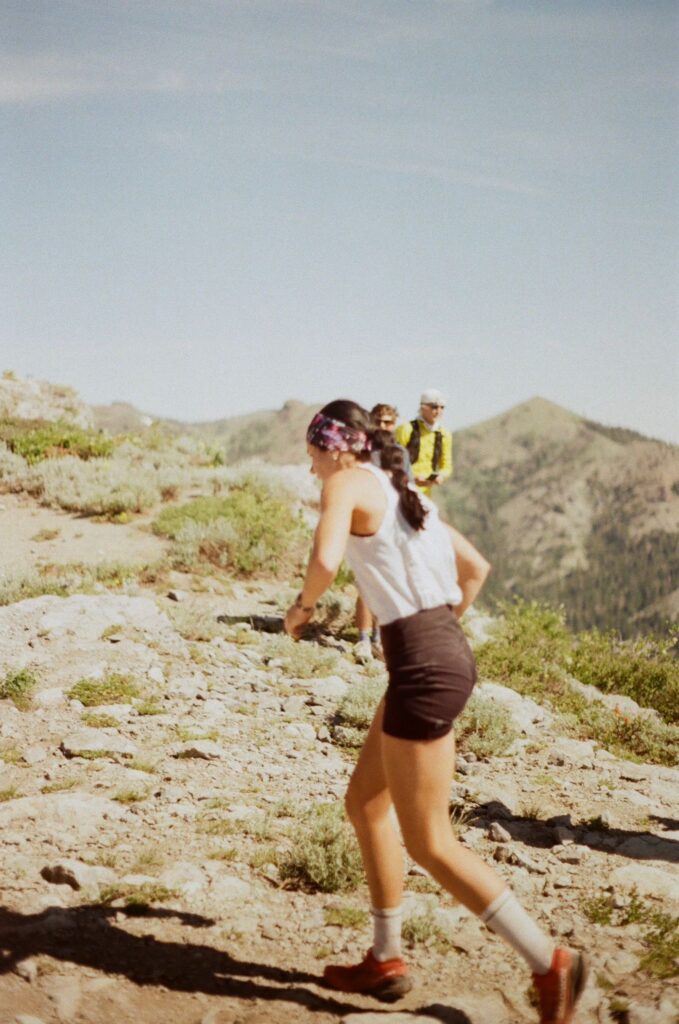
The thing that surprised me most when I started racing skimo competitively was this: the athletes winning World Cups aren’t coming from alpine skiing backgrounds. They’re coming from trail running, Nordic skiing, and uphill racing. The sport rewards exactly what years of trail running develops. A powerful aerobic engine, the ability to hold threshold for extended periods, technical movement over variable terrain, and the particular mental resilience you only build by spending serious time in mountains.
The skimo sprint event at the Olympics was three to four minutes of absolute redline effort. Transitions, bootpacking, skinning, descent, all compressed into something closer to a vertical kilometre race than anything from the alpine world. The individual and vertical races are longer, more in the territory of what trail runners know as type-two fun. If you can run a mountain well, you are already carrying most of the physical architecture this sport requires.
What you’d be learning is the technical layer on top: transitions, getting skins on and off in under twenty seconds; uphill skinning technique; bootpacking efficiently; descending on race skis at speed. These are learnable. The fitness, the part that takes years, you’ve already been building.
Work with me
You already have the engine. Let’s build the rest.
Trail running background, skimo curiosity, and no idea where to start. That’s exactly where I was. Apply to work together.
What “mountain athlete” actually means
For a long time, I described myself as a trail runner who also did skimo, or a skimo athlete who also ran trails. It took an embarrassingly long time to realise those were the same thing said from a place of not quite owning it.
A mountain athlete is someone whose training philosophy is built around the specific demands of moving through mountain terrain across seasons, disciplines, and conditions. It isn’t a summer sport and a winter sport running in parallel. It’s one body, one engine, one set of physical and mental capacities being applied to different surfaces. The recovery strategies, the strength work, the threshold development, the way you manage load across a season, all of it transfers across disciplines when you train it properly.
This is what the best mountain athletes in the world understand instinctively. Kilian Jornet is the obvious example. The elite skimo athletes who come from trail running backgrounds know it too. The mistake most people make is treating each discipline as a separate training block rather than understanding they’re training one athlete to move in mountains, across all conditions and all seasons.
When I started coaching, this was the philosophy I built everything around. Not a trail plan here and a skimo plan there, rather a framework for developing a mountain athlete and deploying that capacity across the specific demands of whatever races they’re targeting.
The press coverage I didn’t know how to use: media is good leverage
In the lead-up to and following the Olympics, I was featured in Forbes Australia, The Guardian, the Sydney Morning Herald, the Australian Financial Review, Women’s Health Australia, Body and Soul, Electronic Groove, When We Dip, and a handful of international publications I genuinely hadn’t expected. At the time, I was too deep in training and competing to stop and absorb what was happening. Sleeping in vans between races in Europe, working a part-time remote job to cover rent, managing my condition, and figuring out skimo transitions as fast as I could so I could have a chance to compete with some very stellar athletes who already had them down pat.
Those articles captured something real about this sport and this moment. Ski mountaineering arriving at the Olympics, an Australian woman competing in it for the first time, the crossover between trail running and mountain sports that I’d been living for years. The Guardian piece, the Forbes cover, and the Women’s Health feature weren’t just coverage of me. They were covering a shift happening in mountain sports, and I happened to be at the centre of it.
That shift is what I’m building my coaching around now. More Australians are discovering skimo. More trail runners are asking how their summers connect to their winters. More mountain athletes are realising that the year doesn’t have to have a complete off-season if you train across it properly. Skimo offers that perfect ‘de-load’ and immense strength, cardiovascular and mental strength benefits! Not to mention picking downhill lines in skimo can really translate to downhill technique in trail running (at least I find!)
What coaching mountain athletes actually looks like
I offer coaching for trail running and ski mountaineering, individually and as an integrated program for athletes who want to train across both. There aren’t many coaches in the world who have competed at the World Cup and Olympic level in both disciplines. Let alone those who have learnt it from the ground up, mostly unsupported, and made pretty much EVERY mistake in the book. Often, in a high-stakes race environment. Lots of laughs to be had about that. There is very minimal coaching support for athletes in Australia for skimo or ski mountaineering.
What that means practically is that I understand the crossover from the inside. I know what a trail running base does for a skimo season, having lived it. I know what skimo strength work does for uphill running, having felt it. I know how to structure a year that contains both a trail running season and a skimo season without sacrificing one for the other, having done it without a coach, under real financial pressure, managing a chronic illness, and still producing results that my coach Gary Howard, who has worked with me since I was seventeen, describes as the best some of the best sub-ultra Australian trail running performances in the country.
This isn’t the textbook. It’s what the mountains actually taught me.
What I would have wanted: a 1:1 Ski-Mountaineering Coach (preferably Australian)
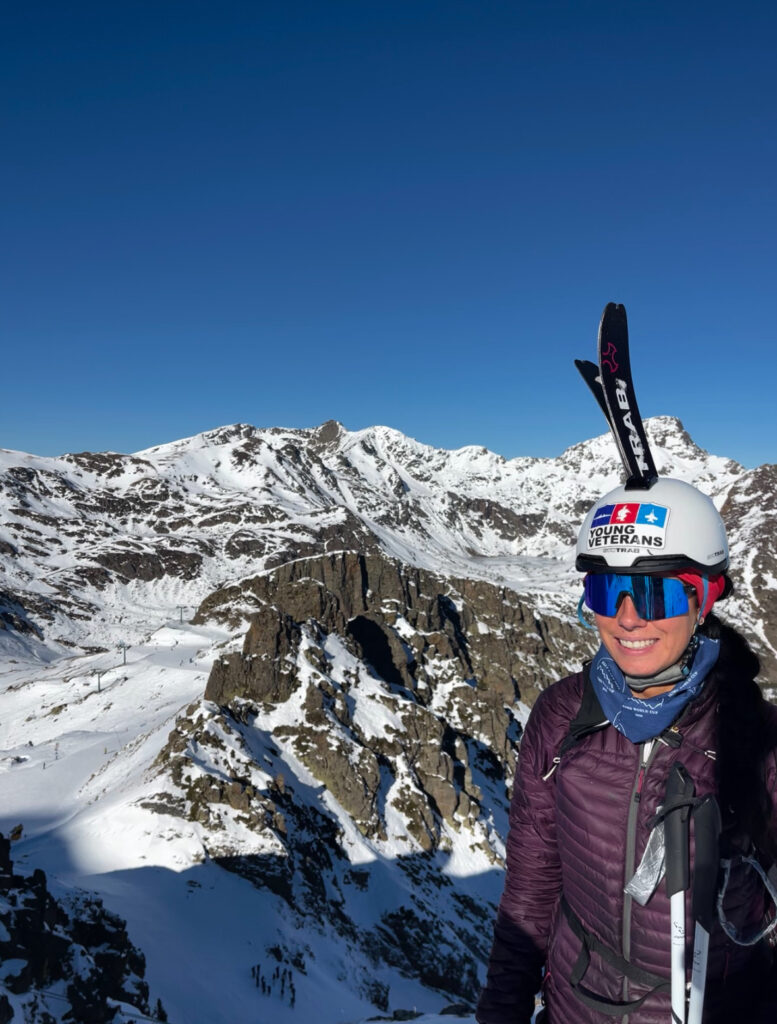
When I was teaching myself transitions from YouTube videos in Idaho and Colorado, I would have paid a lot for someone who had already been through it. Someone who knew which parts of trail running transferred immediately and which parts needed specific work, who understood the equipment, the waxing, how to prepare for a race, or high-mountain/alpine environments, and who had raced the courses I was trying to prepare for.
That coach didn’t exist in Australia….So I became her instead!
The mountains have a way of doing that to you. They take what you already are and demand more of it, in directions you didn’t expect. Trail running led me to skimo, skimo led me to the Olympics, and the Olympics led me here, coaching mountain athletes through the same terrain, with considerably more map than I had when I started. I am so excited for the Alps 2030 Olympic and to see Ski-Mountaineering making a return. Hopefully with the new inclusion of the Individual Skimo event too. That’s the one I’ll be focusing on (if approved, and if there is a qualifying slot), to try and qualify! Read more about the Alps 2030 Skimo Winter Olympics Announcement here. =
The uphill is always worth it.
Ready when you are
The mountains have more map than when I started. Let me share it.
Trail running, skimo, or both. Apply and tell me where you’re at.
Lara Hamilton is an Australian Olympian, elite trail runner, and mountain athlete coach based between Australia, Colorado, and Font-Romeu, France. She competed at the 2026 Milano Cortina Winter Olympics in ski mountaineering as the first Australian woman to do so, and has represented Australia at multiple World Championships in trail running and mountain running. Learn more at larahamilton.com or find out more about coaching at larahamilton.com/coaching.
Lara Hamilton – Australia’s First Female Olympic Ski-Mountaineer – Milano-Cortina 2026 Olympic Games. Skimo Coaching Australia, Ski-Mountaineering Coaching Australia, and Mountain Athlete Coaching Australia. Olympic Athlete Mentoring. Digital Growth Marketing, Creative Strategy, and AI Transformation Specialist at www.larahamilton.com/marketing
Lara Hamilton, as seen in: Forbes Australia, The Guardian, Sydney Morning Herald, Australian Financial Review, Women’s Health Australia, Body and Soul, Electronic Groove, When We Dip
